Citizen Collectives Monitor maps the development, resilience, and challenges of Dutch initiatives

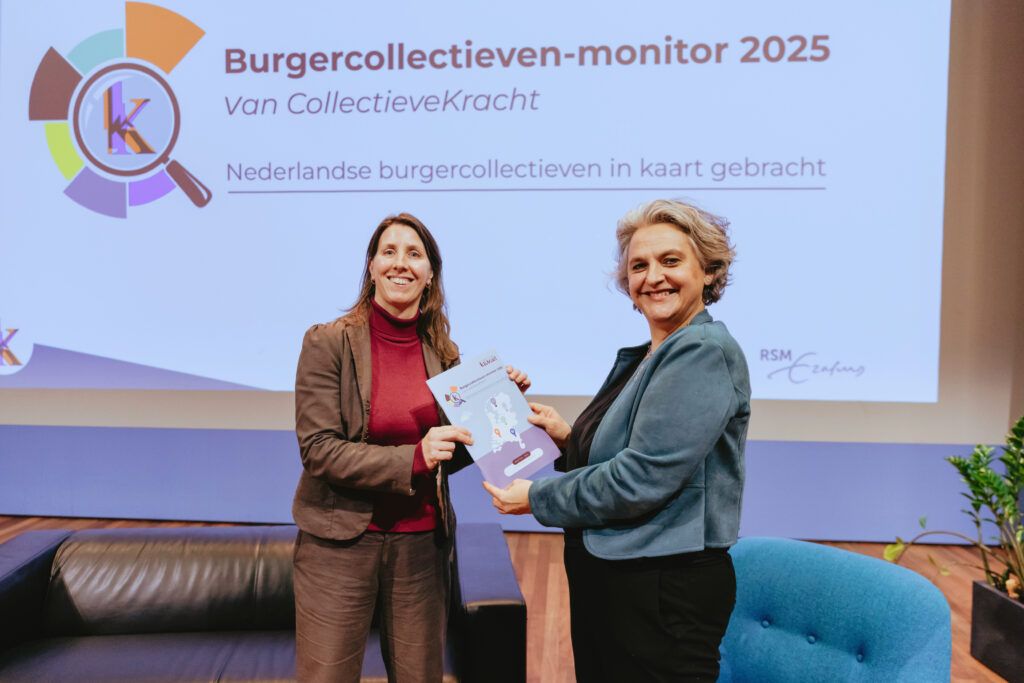
Dive into the data from the first Citizen Collectives Monitor by CollectieveKracht (Dutch publication). Based on information from 431 initiatives, the monitor shows how citizen collectives are increasingly developing into important actors in the public domain.

The first copy was presented on 8 December to Claartje Brons, Programme Manager for Democracy at the Ministry of the Interior. Brons: “When I visit citizen collectives, I see people who want to make a difference, who want to do something meaningful or good, and that happens across many sectors. It is a richness in the Netherlands that is very important and that we can tap into even better. The monitor can help us with that.”

Continue reading
Paper on use of small LLMs in historical studies

Automation of certain parts of data collection and data processing in the field of Social Sciences and Humanities would enable researchers to skip some of the more painstaking tasks, leaving more time for the actual analysis and opening up the possibility to work with larger data sets. So, how can small Large Language Models (sLLMs) help? Marianne Groep-Foncke and Tine De Moor (RSM, Erasmus University Rotterdam) published a paper on this topic, titled: Easily accessible (small) LLMs in historical studies: opportunities, limitations, pitfalls.

Continue reading

Lecture on importance of community building and cooperatives

On November 13, Steunpunt Energietransitie Nijmegen organized the event ‘The Rediscovery of Community.’ As part of the program, Professor Tine De Moor gave a lecture in which she outlined what a “commons” society, one with a major role for communities, could look like. Do citizen collectives embody degrowth or postgrowth as a serious alternative to consumer capitalism and the neoliberal dynamics of our time?

Systemic change cannot be achieved through technology alone. You also need a different institutional logic.

10EMESConf – Extreme Citizen Science as a research approach

During the 10th EMES International Research Conference on Social Enterprise, Lukas Held, scientific project coordinator of CollectivePower.eu, gave a presentation, titled: ‘Engaged research on citizen collectives in the Netherlands through an Extreme Citizen Science platform’ (by Lukas Held and Tine De Moor, Rotterdam School of Management, Erasmus University, and Montserrat Prats López, Open University).

Continue reading