Chapter on avoiding pitfalls for robust data aggregation

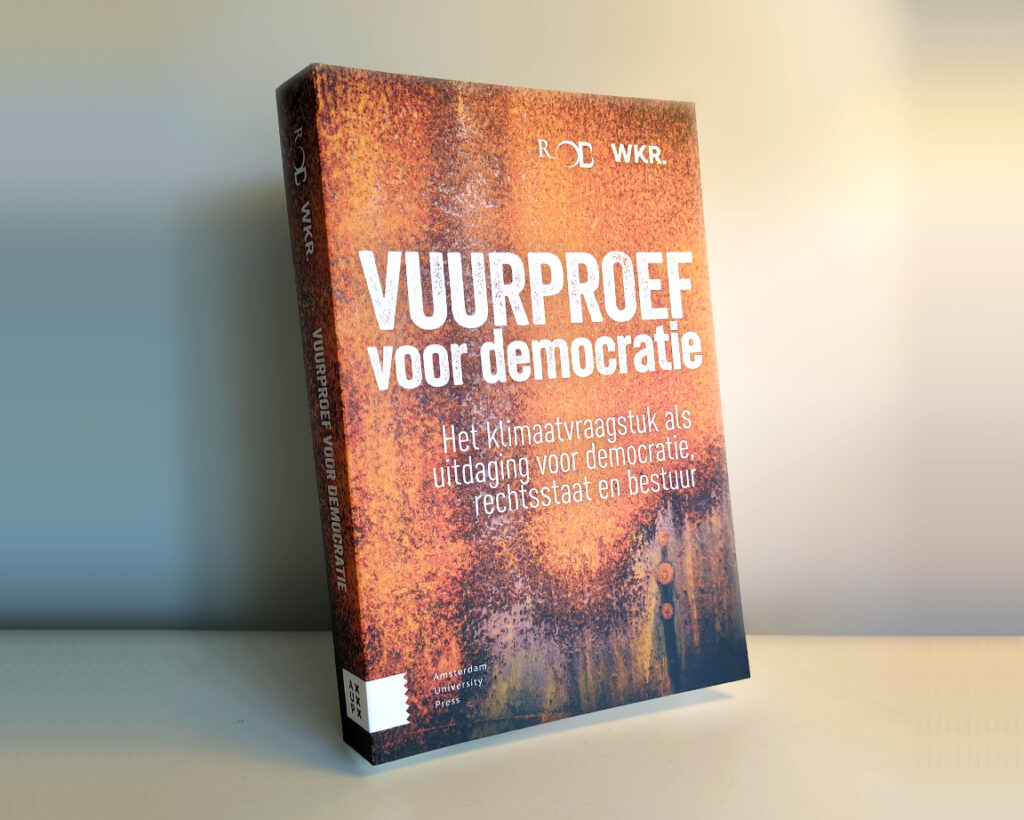
In their chapter, Cooperative Data in a Comparative Perspective: Avoiding Pitfalls for Robust Data Aggregation, written for Global Cooperative Economics and Movements, Véronique de Herde and Tine De Moor examine the methodological challenges of comparing and aggregating cooperative data across time and space. As an increasing number of research projects rely on comparative datasets to assess, for example, the societal impact of cooperatives, the authors analyse a broad corpus of historical cooperative data sources, ranging from registration records to federation data at the national and international levels.

Continue reading

Collaboration for innovative financing of community based enterprises

Together with neighborhood businesses, municipalities, housing corporations, and health insurers, members of the SEICA research group are co-creating an innovative financing mechanism that integrates multiple funding streams. This aims to ensure sustainable funding for CBEs and guaranteed cost savings for the involved parties. This project is an initiative by DAZO and it is one of 25 projects awarded the Knowledge-in-Action (KIN) grant.

Continue reading

SEICA Seminar with prof. Ismael Vaccaro

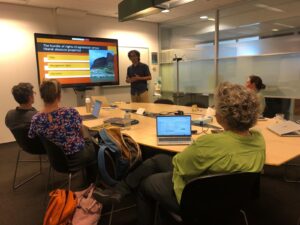
On June 23, Prof. Ismael Vaccaro (CSIC) presented his research about the history of Catalan Commons. The presentation was titled “The Legal Transformations of the Commons in the Catalan Pyrenees: from the Middle Ages until the twenty-first century”.

Vaccaro presented his research on the complex legal history of the old commons, showing how their legal status has been profoundly transformed over time, while certain characteristics have persisted under new legal frameworks.

Continue reading

Lecture on Citizen Collectives and Societal Resilience

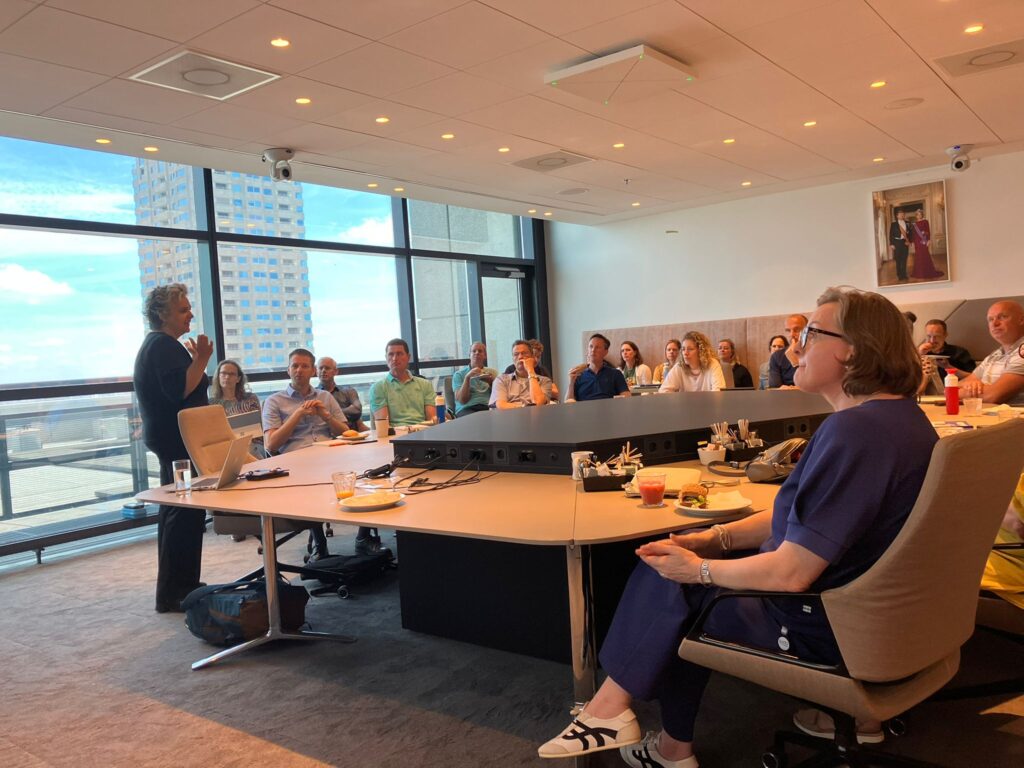
As part of program for the ‘Week of Resilience’ at the Rotterdam-Rijnmond Safety Region (VRR) Professor Tine De Moor gave a lecture on the role of citizen collectives in enhancing regional resilience, titled: “Society as First Responder: Citizen Collectives as Critical Infrastructure for a Resilient Netherlands?”. They examined how initiatives such as energy cooperatives, care collectives, community enterprises, and neighborhood networks contribute to addressing crises and broader societal challenges.

Continue reading

Inspiring Research Day by IOS Platform Bottom-up Initiatives for Societal Change

IOS Platform Bottom-up Initiatives for Societal Change organised a research day at Utrecht University, facilitating the interdisciplinary sharing of expertise on their main research topics and to help to create (new) networks and collaborations. During the first session, several researchers presented their work on entrepreneurship-led sustainable development in Africa, which was followed by a ‘World Café: Building Change from the Bottom Up.

Professor Tine De Moor gave a lecture, titled ‘From grassroots to governance: the maturation of citizen collectives in the Netherlands’. In the lecture, she explored how these initiatives have grown into a diverse and influential movement shaping energy, housing, care and food systems through democratic governance, local stewardship and long‑term community orientation. Their evolution shows that such collectives are not a temporary trend, but a vital complementary governance form whose impact on just and sustainable transitions is increasingly visible across Dutch society.

Vacancies – join the ECCO project as a postdoc researcher

Research project ECCO has officially started! ECCO stands for Empowering Citizen COllectives in societal transitions. We have received a lot of interest in the PhD positions, and now we are looking for three postdoctoral researchers. However, this is not your average postdoc position! The three postdocs will form a collaborative leadership team that works closely with the project leader, the project manager, and the CollectieveKracht team to co-manage the scientific and organisational development of ECCO. Rather than focusing on a single narrow research task, they will play a central role in shaping the direction, collaborations, and outputs of a large, interdisciplinary research programme.

Interested? Make sure to complete your application, including the survey, before 19 April.

If you know graduated PhDs who want to combine excellent research with societal relevance, to grow as a scholar and as a research leader, please refer them to the vacancy

Presenting our practices: how do citizen collectives contribute to the monitor?

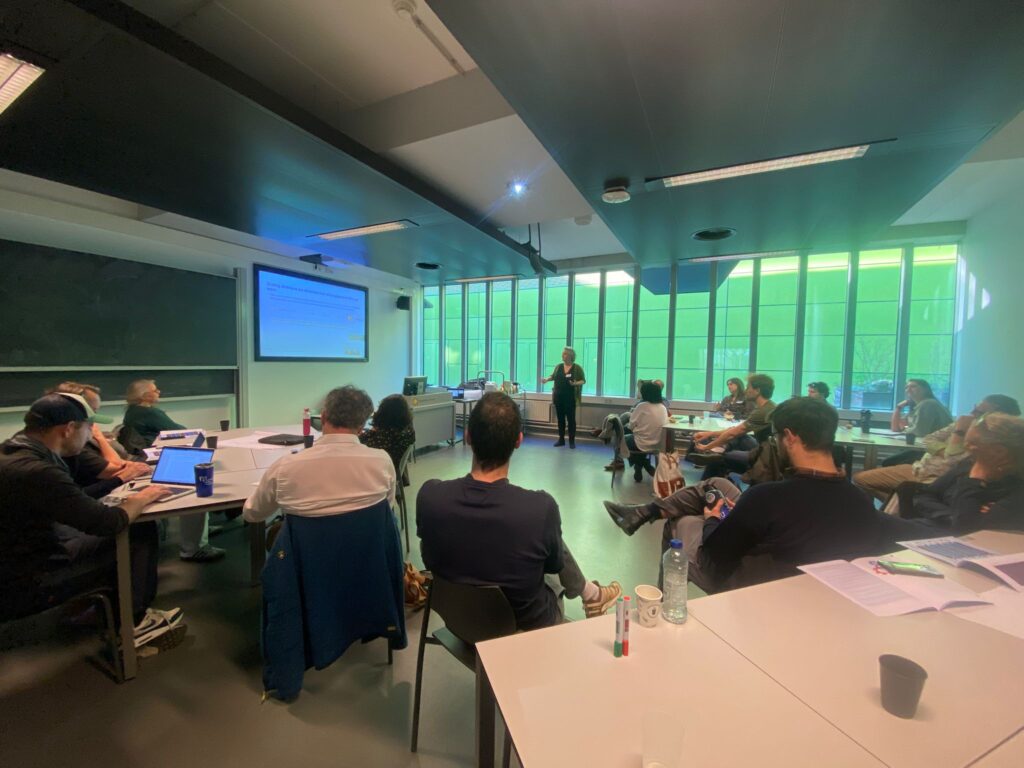
During the National Commons Assembly in Belgium on 7 March, our research group hosted a workshop on the importance of involving citizens in research at every step (extreme citizen science). Lukas Held explained how this takes shape at CollectieveKracht and the role citizen collectives played in data collection, which led to the first Citizen Collectives Monitor last December. Check out the monitor here.

Before that, Professor Tine De Moor (Erasmus University Rotterdam) gave a lecture on citizen collectives as alternative organizations. “There are three principles that enable mechanisms leading to the resilience of these organizations: reciprocity, solidarity, and sufficiency.”

Looking back on achievements of CollectieveKracht in 2025

Knowledge exchange platform CollectieveKracht, one of our SEICA projects, celebrated several big achievements in 2025. For example, the first Citizen Collectives Monitor became a reality! In addition, as part of the ECCO consortium, we secured substantial funding for research into the roles that citizen collectives play in societal transitions. CollectieveKracht organized 5 in-person events and 7 webinars, expanded the knowledge base with over 50 items, and welcomed the 500th citizen collectives’ member.

Watch the recap in less than 3 minutes: