On Wednesday 16 September, Prof. Dr. Tine de Moor, Professor of Social Enterprise and Institutions for Collective Action at Erasmus University Rotterdam, will give a lecture at the Seneca Congress “Samen kan het wel”. Her lecture is titled: “Bottom-up care resilience: the role of citizen collectives in the future of healthcare.”
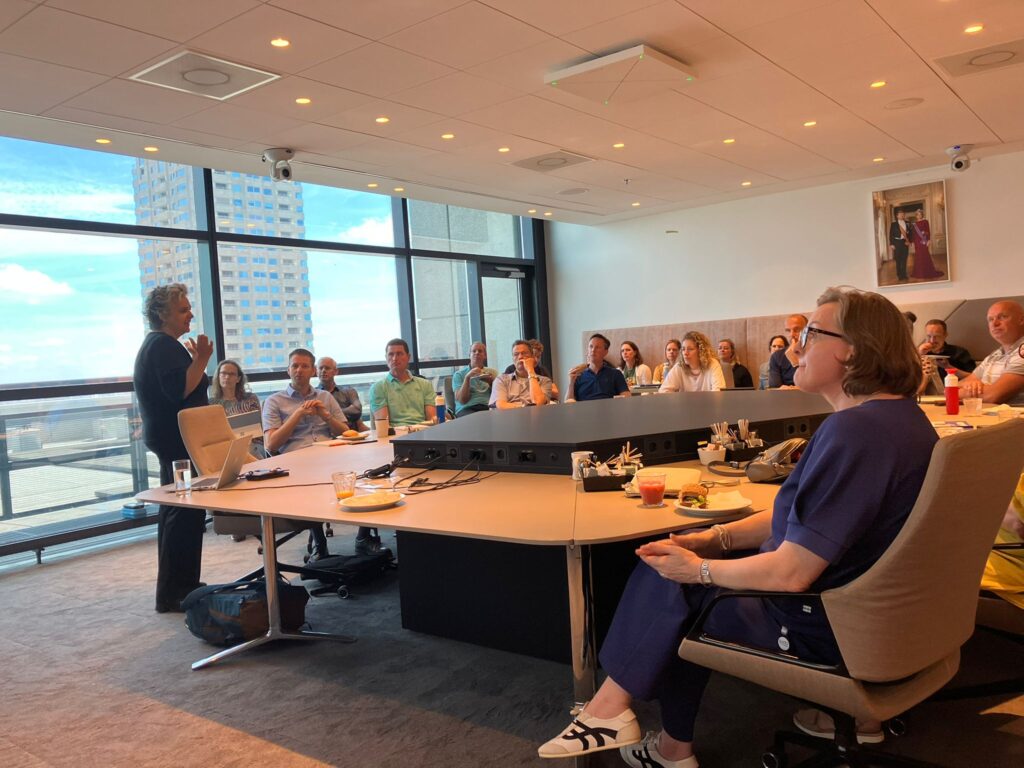
On June 26th, the Association of Netherlands Municipalities (VNG) organized a knowledge exchange event. As part of the program, professor Tine De Moor (Erasmus University Rotterdam) gave a lecture titled: ‘Citizen collectives in action: stronger together with municipalities‘.
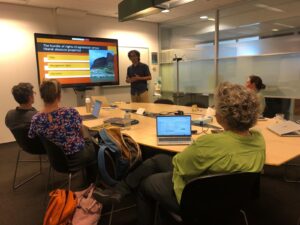
On June 23, Prof. Ismael Vaccaro (CSIC) presented his research about the history of Catalan Commons. The presentation was titled “The Legal Transformations of the Commons in the Catalan Pyrenees: from the Middle Ages until the twenty-first century”.
Vaccaro presented his research on the complex legal history of the old commons, showing how their legal status has been profoundly transformed over time, while certain characteristics have persisted under new legal frameworks.
As part of program for the ‘Week of Resilience’ at the Rotterdam-Rijnmond Safety Region (VRR) Professor Tine De Moor gave a lecture on the role of citizen collectives in enhancing regional resilience, titled: “Society as First Responder: Citizen Collectives as Critical Infrastructure for a Resilient Netherlands?”. They examined how initiatives such as energy cooperatives, care collectives, community enterprises, and neighborhood networks contribute to addressing crises and broader societal challenges.
IOS Platform Bottom-up Initiatives for Societal Change organised a research day at Utrecht University, facilitating the interdisciplinary sharing of expertise on their main research topics and to help to create (new) networks and collaborations. During the first session, several researchers presented their work on entrepreneurship-led sustainable development in Africa, which was followed by a ‘World Café: Building Change from the Bottom Up.
Professor Tine De Moor gave a lecture, titled ‘From grassroots to governance: the maturation of citizen collectives in the Netherlands’. In the lecture, she explored how these initiatives have grown into a diverse and influential movement shaping energy, housing, care and food systems through democratic governance, local stewardship and long‑term community orientation. Their evolution shows that such collectives are not a temporary trend, but a vital complementary governance form whose impact on just and sustainable transitions is increasingly visible across Dutch society.
During the National Commons Assembly in Belgium on 7 March, our research group hosted a workshop on the importance of involving citizens in research at every step (extreme citizen science). Lukas Held explained how this takes shape at CollectieveKracht and the role citizen collectives played in data collection, which led to the first Citizen Collectives Monitor last December. Check out the monitor here.
Before that, Professor Tine De Moor (Erasmus University Rotterdam) gave a lecture on citizen collectives as alternative organizations. “There are three principles that enable mechanisms leading to the resilience of these organizations: reciprocity, solidarity, and sufficiency.”