Paper explores the evolution of common lands in 19th century Spain

Affiliate researcher José-Miguel Lana Berasain, Professor of Economic History and Institutions in Public University of Navarre, has published a paper where he dives into the transformations of common lands in Spain during the 19th century.

‘Between a rock and a hard place: the privatization or preservation of the commons in Spain in the 19th century’ was published in the Zeitschrift für Rechtssoziologie. The study reveals the complexity of the processes of change in property rights and the need to approach property rights as a bundle of rights and powers that could be vested in different players.

Continue reading

Grant for project on data memory of citizen collectives’ movement

Professor Tine De Moor (Rotterdam School of Management, Erasmus University) has obtained additional funding from the NWO Impact Explorer. This gives us the opportunity to take a big step in building the memory of citizen collectives.

Many network organizations lack the resources (time, manpower, finances) to manage data effectively, which hinders collaboration with scientists. That’s unfortunate, because research can lead to valuable insights that allow us to better understand this movement. It can help civil servants to formulate more targeted policies and citizen collectives to improve their working methods and use resources more efficiently.

Through knowledge exchange platform CollectieveKracht, we will deploy a knowledge broker who will identify relevant information and develop data structures to support citizen collectives in data collection and management. In this way, the knowledge broker strengthens the position of citizen collectives and lays a solid foundation for future research and policy.

Open Seminar Talk – Nicolas Jager (WUR)

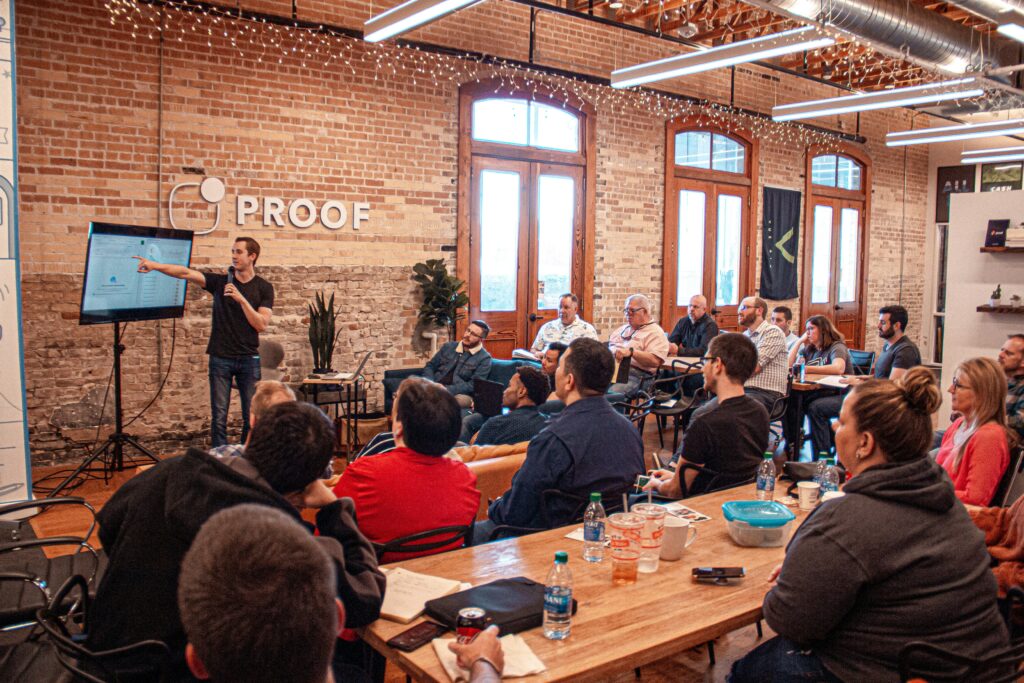
On September 24, dr. Nicolas Jager opened the new season of our SEICA Open Seminar Talks. Dr. Jager is Assistant Professor for the governance of sustainability transformations with the Public Administration and Policy group at Wageningen University & Research. He gave a presentation titled ‘Does public participation improve environmental governance and foster collective action? What works, when, and how?

He discussed a meta-analysis of 305 case studies, which provides insights into how ‘more’ participatory decision-making processes compare against ‘less’ participatory ones in fostering – or hindering – strong environmental governance outputs. The presentation was based on the study “Does stakeholder participation improve environmental governance? Evidence from a meta-analysis of 305 case studies”Find it here.

European Network for Housing Research invites Tine De Moor as speaker

How can cooperative housing be part of the solution to social, affordability and environmental challenges? On August 28, professor Tine De Moor from the Rotterdam School of Management (Erasmus University) shares her insights during the ENHR Conference 2024.

Tine De Moor is invited as a speaker alongside Jardar Sørvoll, Research professor, University of Oslo, and guest editor of the forthcoming special issue on Housing Cooperatives in Housing Studies. The moderator of this plenary session is Darinka Czischke, Associate Professor Housing and Social Sustainability, TU Delft, and co-founder of the ENHR WG Collaborative Housing.

Continue reading

Paper on collective resource management in a cooperative facing external shocks

How are regulative institutions used to curb members’ opportunism in a heterogeneous cooperative while facing external shocks? This question is posed in a paper by Damion Bunders and Tine De Moor from the Erasmus University Rotterdam. The paper, titled “Using the institutional grammar to understand collective resource management in a heterogenous cooperative facing external shocks”, is published in the Journal of Regulation & Governance and can be found here.

The study explores how Smart, a Belgian worker cooperative for freelancers, adapted its rules between 2017 and 2022, covering two external shock events: the COVID-19 pandemic and a new cooperative law. Building on the institutional grammar methodology, Bunders & De Moor analyze 412 rules of Smart. The study shows, amongst others, that external shocks with sudden resource scarcity (like COVID-19) do not necessarily motivate rule changes, while external shocks without an effect on collective resources (new national legislation) can motivate rule changes. Additionally, the study provides support for the notion that cooperatives with a heterogeneous membership design rules to prevent members from overusing or under-contributing to collective resources. This paper also develops the institutional grammar’s ability to measure institutional meaning.

Affiliate researcher: Íñigo Ena Sanjuán

We are happy to announce that Íñigo Ena Sanjuán has aligned with the research group Social Enterprises and Institutions for Collective Action as an affiliate researcher. He is a Alexander von Humboldt Postdoctoral Fellow at the Leibniz Universität Hannover (Germany) and Associate Researcher in the ERC Consolidator Grant ‘IberLAND‘. For the latter, Íñigo Ena Sanjuán organizes the summer lecture series ‘Between Eden and Fall: Common Land in Early Modern and Modern Western Europe‘. Find more information here.

“The SEICA network presents a valuable opportunity to connect with colleagues who are addressing collective action issues and share perspectives, methodologies, and findings. SEICA offers a platform for scholars from diverse fields to collaborate in addressing social, economic, and ecological challenges.”

Rotterdamlezing by Tine De Moor – How value becomes resilient: building the community economy in Rotterdam

On May 13, Tine De Moor, professor of Social Enterprises and Institutions for Collective Action at Rotterdam School of Management, explored the value of citizen collectives during this year’s Rotterdamlezing. Are they the missing link between citizens and government? In the ever inspiring Arminiuskerk, Tine De Moor takes you on a journey through Rotterdam’s past to a distant future, which may become even more local than before. The recording of the lecture is now available with English subtitles.

“Rotterdam citizen collectives differ in some ways from the rest of the country. For instance, in our city there is a much greater emphasis on collectives targeting lower income categories and providing a solution in the social sector.”

Read more about the 20th edition of the Rotterdamlezing.