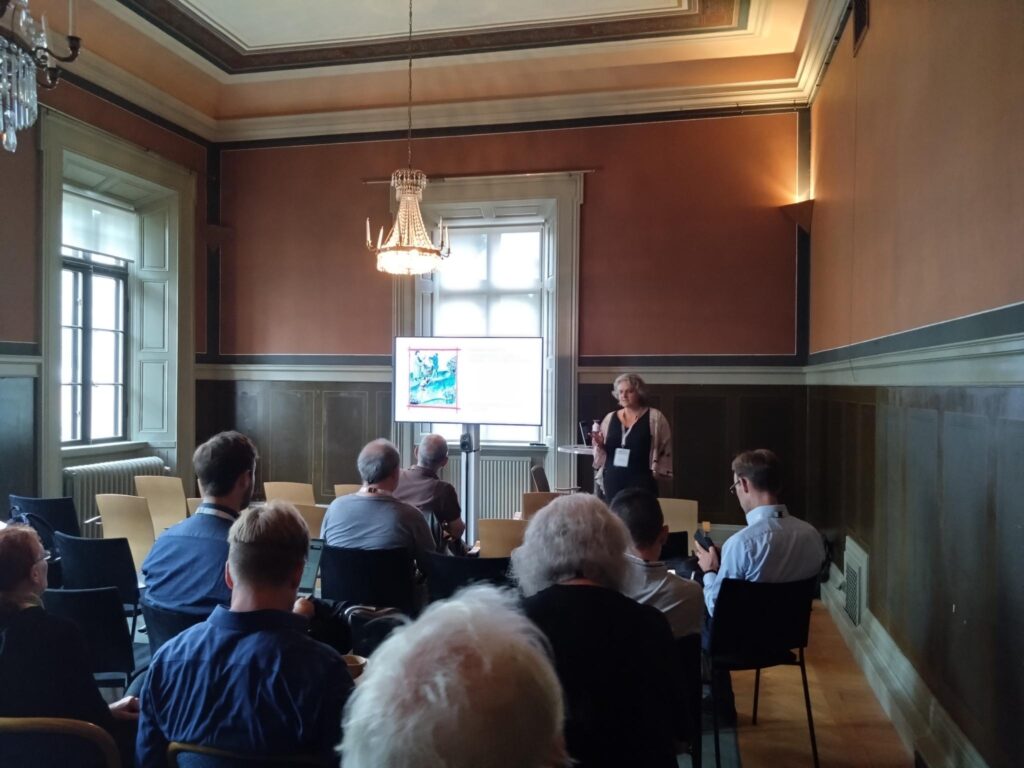
Team members and affiliated researchers of the SEICA research group visited the World Economic History Congress 2025 (Lund, Sweden). The theme for the congress was “Equality and Sustainability Challenges.” This theme underscores some of the pressing issues humanity faces today and draws connections to a diverse array of historical problems. To both understand and address these challenges and to derive insights from the historical record, a range of perspectives is essential.
Professor Florian Grisel, professor Tine De Moor, professor José-Miguel Lana Berasain, and Dr. Marianne Groep-Foncke presented their work as part of the session ‘Common Concerns. Environmental Literacy Among Commoners in Early Modern Europe’ on July 30, 2025.
Common Concerns. Environmental Literacy Among Commoners in Early Modern Europe
In the late Middle Ages and early modern period, Europeans formed institutions for collective action to manage natural resources like land, water, and fish. These governance models, based on shared rules and values, appeared as commons, waterboards, and fishing communities. This session during WEHC 2025 combined insights from economic history, organizational studies, and environmental history to examine commoners’ awareness of resource limitations and their sustainable management practices. It explored how they regulated and enforced rules to protect their environment and the long-term effects on resource sustainability. These historical insights are crucial for understanding modern institutions addressing today’s sustainability challenges.
Session participants, affiliations and paper titles:
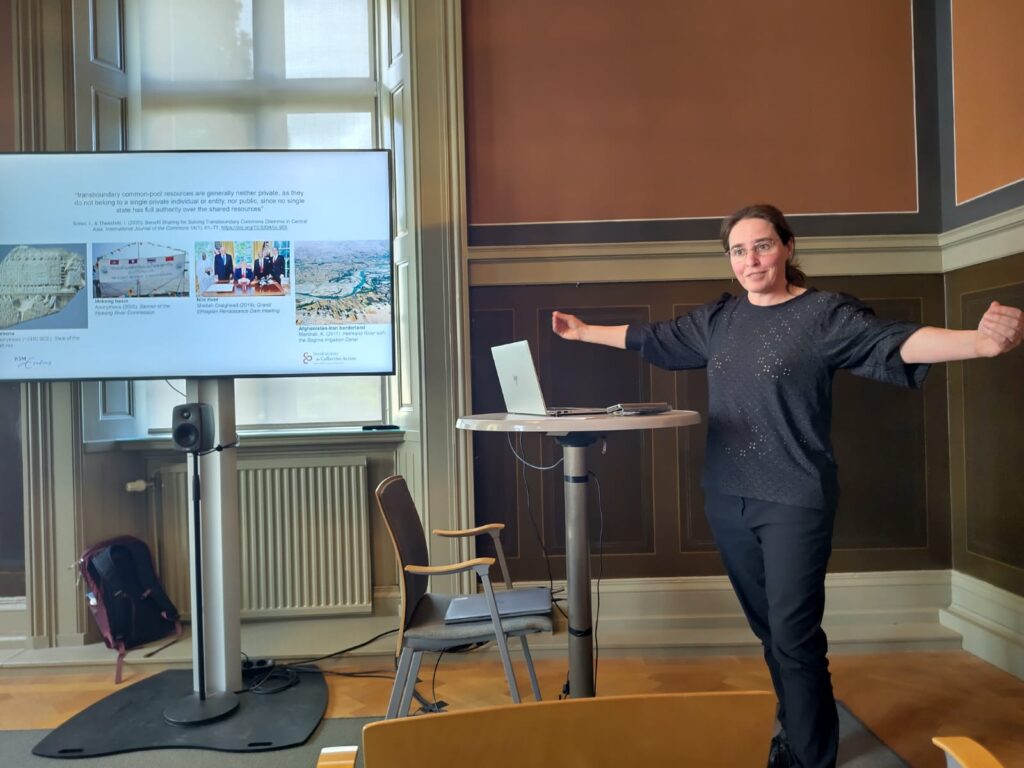
1. ‘Rivalling for water. The roles of government, institutions for collective action, and individuals in early modern environmental issues’ – Marianne Groep-Foncke (Erasmus University Rotterdam).
Dr. Marianne Groep-Foncke presented the challenges of early modern water management, zooming in on the Dutch city of Haarlem, which had to cope with an increasing pressure on water quality because of population growth, salinization, and two rivaling trades – brewing and the cloth industry – that both needed access to clean water. The paper explores the interplay between stakeholders with divergent institutional backgrounds, who each in their own way took responsibility to control water quality: provisional collective action groups, established institutions such as guilds and waterboards, and the municipal government that represented the communality of inhabitants. It investigates how the stakeholders addressed the sustainability challenge at their doorstep, the interests they guarded, and the interrelatedness of their problems.
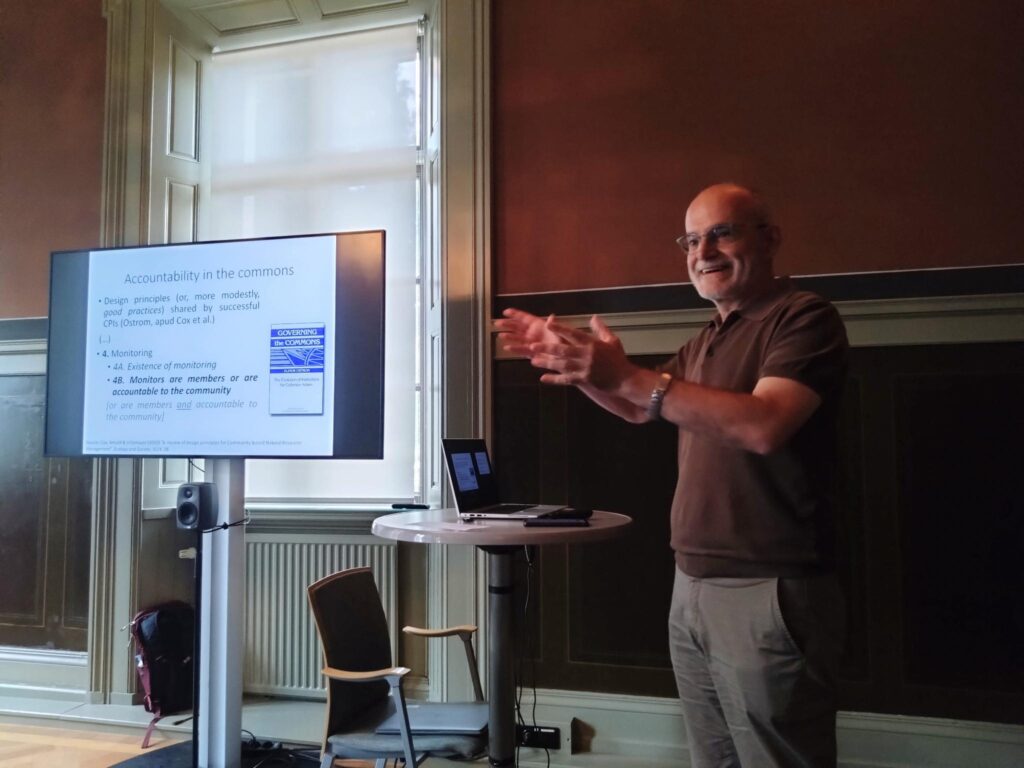
2. ‘Accountability in the historic commons: environmental, moral or financial motivations?’ – José-Miguel Lana Berasain (Public University of Navarre).
Using accounting techniques, dr. José-Miguel Lana Berasain explained what motivated early modern commoners in Spain to establish protocols to control the management of their resources, thereby driving some innovations in controlling techniques of the representatives of the collectives. This paper ponders the importance of the different sources of motivation that could justify the establishment of protocols to control the management by the appointed officials. Lana Berasain assesses the balance in the interaction between the human group and the natural environment, moral reasons, and economic concerns.
3. ‘With the help of God. How religion sustained environmental literacy in the fishery commons of early modern Europe’ – Florian Grisel (University of Strasbourg), Tine De Moor (Erasmus University Rotterdam).
Prof. Tine De Moor and dr. Florian Grisel dove into the role of small-scale fishers’ organizations (cofradías in Spain, prud’homies in France), in fostering environmental literacy among their members. The paper illuminates how these organizations utilized the dense, multiplex social ties within their communities to intertwine environmental stewardship with other normative systems. The study contributes to the understanding of environmental literacy, proposing that the success of environmental policies may hinge on their ability to align with existing social and cultural frameworks.