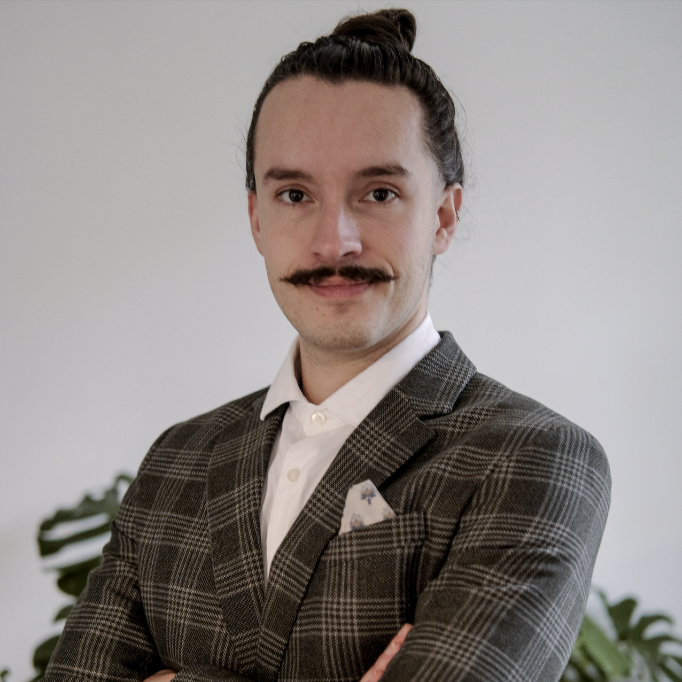
Affiliate researcher: Florian Grisel

We are happy to announce that dr. Florian Grisel, has aligned with the research group Social Enterprises and Institutions for Collective Action as an affiliate researcher. 

Dr. Grisel is a Research Fellow at the Centre national de la recherche scientifique (University of Strasbourg, SAGE) and a Senior Research Fellow at Centre for Socio-Legal Studies (University of Oxford). In his book The Limits of Private Governance: Norms and Rules in a Mediterranean Fishery (Hart Publishing, 2021) he explores the history of a communal organisation and its role in the management of a Mediterranean fishery.

“I am delighted to join the research group on Institutions for Collective Action as Affiliate Researcher. I share the excitement and interest of the group members for the various institutionalised organisations that tackle collective action problems arising from the management of natural resources.”

Collective action in water management in early modern Holland

Water is inherently circular. It cannot escape the hydrologic cycle and will re-emerge time and again as water. In the seventeenth century, city dwellers of Holland made use of this natural cycle. They withdrew water that had rained down or flowed into the city and put it to use for their own benefit. How did they ensure availability of water of the right quality, in the right amount and at the right place for the community? How was wastewater either deployed or disposed of?

In the article ‘Waste in Water. Water as Waste. Informal Collective Action in Seventeenth-Century Holland‘, dr. Marianne Groep-Foncke explores, amongst others, which parties within this polycentric governance system took the responsibility for the drainage of surplus water and the availability of water of sufficient quality for consumption or production purposes.

Continue reading

Research on crowdsourcing: how to attract and engage volunteers online?

Crowdsourcing, or harnessing the power of volunteers online, has become increasingly popular. Especially among public libraries, museums, archives and research institutions. However, attracting volunteers and keeping them engaged is often challenging for project managers.

The article “Behind the Crowdsourcing Platform: Assessing Volunteer Recruitment and Engagement Instruments” analyzes the effectiveness of recruiting and engagement instruments on volunteers’ activity. The article by Montserrat Prats López, Auke Rijpma, Tine De Moor, and Jolien Reijerink is published in the Nonprofit and Voluntary Sector Quarterly and can be found here.

Continue reading

Daniel Petrovics joins SCENSUS project

Research group Social Enterprises & Institutions for Collective Actions welcomes postdoctoral researcher Daniel Petrovics. He will join the SCENSUS project team. Daniel has a keen interest in urban sustainability issues, cooperative-based energy governance and organisational transparency. He is currently finishing his PhD on the scalability of energy communities. His research is based on polycentric governance thinking and the strategic niche management approach.

Welcome! See his profile page for more information.

Open Seminar Talk: David Soto-Oñate (UVIGO)

On November 28, 2023 as part of our Open Seminar Series, visiting fellow dr. David Soto-Oñate from the University of Vigo presented a work in progress called “A polycentric approach for a post-growth social order”. This project attempts to elaborate a theoretical framework on the intersection between the post-growth universe and polycentric governance. He invited the attendees to a collective deliberation on what this intersection could be and how to approach it theoretically.

Continue reading

PhD Candidate: Shreya Paudel

Research group Social Enterprises & Institutions for Collective Actions welcomes, once more, Shreya Paudel. After an internship with SEICA and completing her Erasmus Mundus Master, she now joins the team as a PhD candidate within the UNICA-VICI project, supervised by Tine De Moor. Her previous experience includes research on the short-term evolution and adaptation of institutions for collective action, policy analysis, and political economy analysis in contexts of South Asia and Africa.

“I am thrilled to join the research team, and RSM for the diversity of ideas and expertise. I see this as a great platform to build on my research interest and direct the outcomes towards actionable initiatives.”

Welcome back! See her profile page for more information.

Next step for researcher Véronique De Herde

Postdoctoral researcher Véronique De Herde is taking her next step after working with Social Enterprises & Institutions for Collective Action for 1,5 years. She starts a three-year postdoctoral mandate at the University of Liège, Center for Social Economy, with professor Frédéric Dufays. The research will focus on cooperative models of value chain organization in the agri-food sector. The objective is to disentangle the complex factors contributing to their strategic relevance for sustainable transitions.

Continue reading

Open Seminar Talk: Max Harleman (GCSU)

On October 31, 2023 as part of our Open Seminar Series, Dr. Max Harleman from Georgia College & State University presented an early draft of his paper entitled Can Collective Action Institutions Outperform the State? Evidence from Treatment of Acid Mine Drainage. The paper is motivated by the fact that relatively few studies examine how collective action institutions perform relative to the state at providing public goods, and they fail to account for the possibility that the state might self-select into providing public goods in the most challenging contexts. If this were the case, finding that the state performs worse than collective institutions could reflect its more challenging context rather than differences in knowledge, skill, or motivation.

Continue reading

Encyclopedia of Social Innovation

The Encyclopedia of Social Innovation offers an interdisciplinary and comprehensive overview of the field of social innovation, providing an insightful view into potential future developments both practically and theoretically.

The 77 entries by prominent international scholars cover a variety of key themes including social innovation ecosystems, co-creation, new technologies and methods, education, governance and policies. One of the chapters focuses on the revival of the commons. It is written by professor Tine De Moor from the Rotterdam School of Management. Find more information on the book here.