Open Seminar Talk: Max Harleman (GCSU)

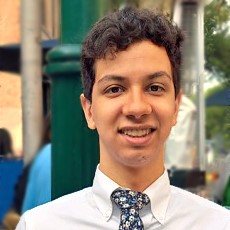
On October 31, 2023 as part of our Open Seminar Series, Dr. Max Harleman from Georgia College & State University presented an early draft of his paper entitled Can Collective Action Institutions Outperform the State? Evidence from Treatment of Acid Mine Drainage. The paper is motivated by the fact that relatively few studies examine how collective action institutions perform relative to the state at providing public goods, and they fail to account for the possibility that the state might self-select into providing public goods in the most challenging contexts. If this were the case, finding that the state performs worse than collective institutions could reflect its more challenging context rather than differences in knowledge, skill, or motivation.

Continue reading

Encyclopedia of Social Innovation

The Encyclopedia of Social Innovation offers an interdisciplinary and comprehensive overview of the field of social innovation, providing an insightful view into potential future developments both practically and theoretically.

The 77 entries by prominent international scholars cover a variety of key themes including social innovation ecosystems, co-creation, new technologies and methods, education, governance and policies. One of the chapters focuses on the revival of the commons. It is written by professor Tine De Moor from the Rotterdam School of Management. Find more information on the book here.

‘Adviezen voor burgerinitiatieven’ – interview in Trouw

The Dutch paper Trouw interviewed professor Tine De Moor (Erasmus University Rotterdam) and researcher Roel During (Wageningen University & Research) about how to succeed with you citizen initiative. The interview was published alongside the disclosure of this years Duurzame 100, a list ranking sustainable citizen initiatives. The article can be found here.

Paper on the development of platform cooperatives in the European gig economy

Damion Bunders and Tine De Moor from the Erasmus University Rotterdam published their paper “Paradoxical Tensions as a Double-Edged Sword: Analysing the Development of Platform Cooperatives in the European Gig Economy” in the Journal of Management Inquiry. It’s open access and can be found here.

Platform cooperatives promise to provide an alternative organizational model of worker ownership and governance to heavily criticized investor-owned gig platforms, but have until now remained relatively rare. This study examines the development of platform co-ops to gain insight into the reasons and mechanisms behind their slow but steady growth in Europe.

New book on collaborative living

Collaborative living is experiencing a revival in The Netherlands. In the midst of an unprecedented housing crisis, more and more people turn to collective self-organisation to provide housing that is community-oriented, environmentally sustainable and affordable. But why is it so difficult for these initiatives to get off the ground? And what can be learned from other European countries?

Dr Darinka Czischke, Associate Professor in Housing and Social Sustainability at TU Delft, wrote a new book on this theme with colleagues Marije Peute and Sara Brysch. ‘Together: Towards Collaborative Living’ presents a collection of essays, data and cases from The Netherlands and other European countries that build on a knowledge programme developed in 2021 by Project Together!. The book illustrates the dilemmas and opportunities to move towards a new paradigm on how to live in the twenty-first century, together.

The book launch is on October 24 at Pakhuis De Zwijger. Read more about the event >

You can pre-order the book here >

New affiliate reseacher SE&ICA

Research group SE&ICA welcomes dr. Enrique Santamaría Echeverría as an affiliate researcher. Enrique is a researcher in Innovation of Public Law at Erasmus School of Law, Erasmus University Rotterdam (The Netherlands).

His research focuses on the relations between the human body and the law. Although it focuses predominately on bio law and private law problems, it also has a strong cross/interdisciplinary component, and tackles issues closely related to the fields of bio ethics, philosophy, data governance, and the protection of human dignity and other fundamental rights. His most recent research interests include health data governance, data and genome commons and health data cooperatives.

Thriving community enterprise ecosystems – SEWF

On October 10, Ondernemen met je Buurt organizes a SEWF Fringe Event and has invited Lukas Held from CollectieveKracht to participate in a discussion around thriving community entrepreneurships. He will shine a light on the commons movement and the role of the government. Also attending are: Tutku Yuksel, initiator of Thuis Wageningen, Caroline Gribner and Safka Overweel regarding funds such as Stichting DOEN and Katalys, and Martin Avila, explaining how the Scottish government created a welcoming environment for collectives.

From 9 to 13 October SEWF Week ’23 takes place, organized by the Social Enterprise World Forum. On the 10th is Fringe Day: a collections of related (and mostly free) events independent of SEWF.

Next step for research intern Grant

Grant Halliday, who has been with the team as a research intern since September 2021, will start his PhD near the end of the month. It will be a History PhD at the University of Michigan, with the current plan focusing on early medieval economic and environmental history. He’ll likely be working on some aspect of institutions surrounding agriculture and peasant organizations in the Merovingian period. It will be a interdisciplinary project, as he is hoping to bring in some archaeobotanical research in along with institutional theory. He is also thinking of ways to analyze collective action in the period, something that a few other researchers have begun to explore in the last couple years.

A word from Grant: “I certainly hope to continue fishing collective research on the side as well and will certainly keep up with the team. Working with this group has put me on a good footing for graduate study, I believe, and I can’t thank everyone enough for their kindness and support!”